
Energy Equity Project Materials
- Energy Equity Fact Sheets for all 50 States
- Shutoff Abolition Hub
- A Tsunami of Shutoffs – Analysis of 2024 EIA Shutoff Data
- IOU TKO Resource Hub
- Presentation topics
- Energy Equity 101
- Energy Affordability Primer
- Shutoffs Primer
- Michigan Outage Map
- Energy Bill Transparency Initiative
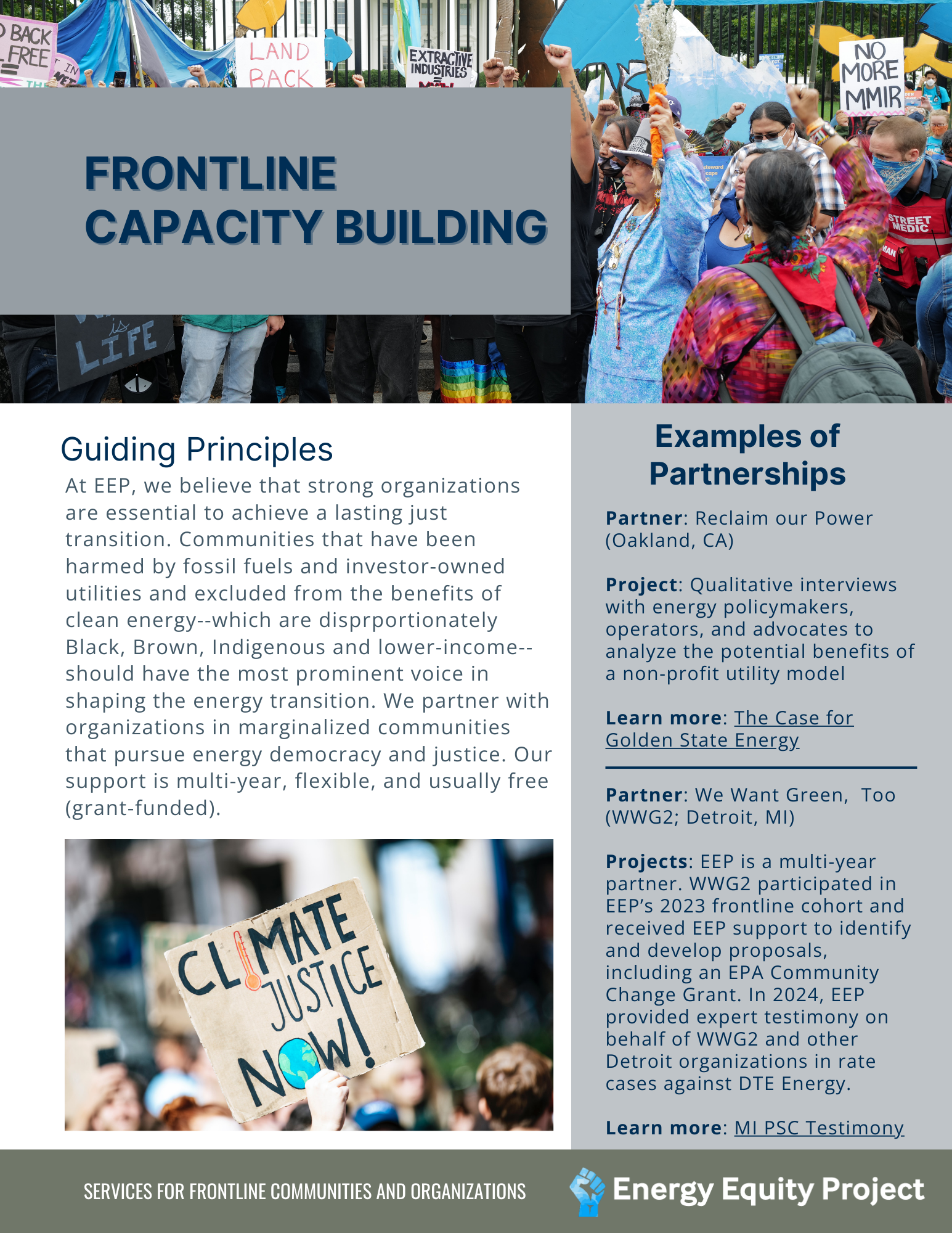
- Frontline Capacity Building 2-pager
- Democratizing the Power of Data 2-pager
- Transforming Public Institutions 2-pager
- IL Gas Rate Case Story
- Shutoffs and Unaffordable Energy Bills Are Not Inevitable – A Summary of Response to Niagara Mohawk’s 2025 Rate Case
- Energy Equity Project Framework

Foundational Resources
- Jemez Principles of Environmental Justice
- Bali Principles of Climate Justice
- Principles of Energy Democracy
- “The Spectrum” of Community Engagement to Ownership
- Energy Justice Workbook
Our Go-To Energy Equity Dashboards, Tools, and Resource Compilations
The world is oozing with new tools and resources, reports and datasets. Open access to these is strengthening energy equity and justice work, but it also means it’s increasingly difficult to navigate and find what you’re looking for. We’re offering a concise, annotated list of our favorite collections. If this compilation was all we could ever turn to advance energy equity, we don’t think we’d ever run out of transformative work to do. Undoubtedly we’ve missed some that deserved to be on this list; we’ll do our best to share and compile more resources as we discover them.
- Chisholm Legacy Project Resource Hub: Hundreds of resources that are expertly curated and organized in service to supporting Black climate justice leadership. “The resources….have been selected to provide holistic support to those resisting extractivism and creating regenerative and democratic systems in their communities.” You’ll find documentaries and podcasts, anti-racism trainings, and links to fellowships. The accompanying Policies for the People page is a stellar compliment to the Resource Hub.
- Community Power Map: Institute for Local Self-Reliance: Access state scores in twelve categories of policies that either support or hinder community power. Categories cover topics like inclusive financing, net metering, utility franchise agreements, and renewable portfolio standards. You can also see maps of specific community solar and community choice aggregation project sites. And if you haven’t heard Local Energy Rules, it’s one of our favorite pods.
- Energy Democracy Project: Democratic control of energy systems is a critical but underrepresented element of energy equity and justice. EDP brought together visionary leaders across the country, creating a revolutionary community and the vision, tools and language to Check out the People’s History of Utilities and People’s Utility Justice Playbook for starters.
- Energy & Policy Institute: A lot of investor-owned utilities do dirty things to keep their control of dirty fossil-fueled monopolies. EPI gives you the dirt on them – how they use money and political power to rig the game in their favor and ammunition to expose and combat myriad forms of corruption and abuse. While much of what they share is jaw dropping and infuriating, they also report on the wins to reign in utility influence, too.
- Environmental Justice State by State: Multiple Institutions: Designed as “a law library for community advocates, attorneys, scholars, and policymakers,” the database offers a comprehensive report of every states environmental justice (including energy justice) policies. It’s easy to find model policies and search by the type of policy – you’ll find two mapping tools in New Mexico, for instance.
- Initiative for Energy Justice: IEJ continues to be one of the go-to, groundbreaking resources for deep dives into energy justice theory, measurement, and applications. The Workbook and Scorecard are classics we highly recommend, but you’ll also . And if you haven’t read Shalanda Baker’s Revolutionary Power, this is a good reminder that one of the most inspiring reads in the field is waiting for you.
- LEAD Tool (energy burden) – Department of Energy: The map functionality is not always the most intuitive, and trying to extrapolate data from counties to census tracts is challenging. Still, the tool provides a quick visual of where high energy burdens are concentrated and allows powerful filtering using multiple variables, both in the tool itself and if you download the data to work with in Excel or another program.
- Utility Disconnections Database – Indiana University Energy Justice Lab: Disconnecting people from access to heat and electricity, which the U.N. and others have affirmed as basic human rights, is abhorrent. Policies are needed to end disconnections; we hope that data transparency is a tool advocates can use to strengthen their work.
- Powerless in the U.S. – Center for Biological Diversity
- Upcharge – John Farrell, Institute for Local Self Reliance
- Utility Bills Are Rising – PowerLines
- Rate of Return Equals Cost of Capital – Mark Ellis, also podcast & testimony